Riftbound Radiance Is Here: What to Play, Collect, and Keep
Riftbound Radiance is out. Explore the new mechanics, Showdown Decks, K/DA and Heartsteel treatments, Ultimate Rare odds, and what to keep before sorting duplicates.
Riftbound: Radiance released on October 23, 2026, bringing League of Legends' music scene to the tabletop. For a ready-made match, look at the Seraphine vs. Evelynn Showdown Decks. For collecting, the K/DA and Heartsteel treatments deserve a closer look. Either way, decide what you want from the release before opening packs.
Here is what matters for your first weekend with Radiance, from its new mechanics to the cards you should separate before sorting duplicates.
Riftbound Radiance release date and languages
Radiance launched on October 23 in English, French, and Simplified Chinese. It is Riftbound's fifth set and closes out the game's 2026 main set lineup.
Check the actual card or product language before ordering, especially when photos show packaging rather than the exact item you will receive. Keep different languages separate when cataloging your pulls.
What is new in Radiance?
Three keywords change how cards create advantages:
- Deploy: Certain Gear goes directly to a Battlefield and provides benefits there. It is killed when an opponent holds that Battlefield.
- Show Off: Revealing a qualifying card from your hand or board unlocks an additional effect.
- Disarm: An attacking effect reduces an enemy Unit's Might. Multiple instances strengthen the reduction.
Radiance also adds Equipment Units through Orianna's Legend effect and introduces Bomb tokens. Read the cards you open before assigning everything outside your favorite champion to the duplicate pile.
For a first game, learn one new mechanic at a time. Read the relevant card aloud and work through its timing with your opponent. Knowing what triggers an effect is more useful than memorizing a keyword without its context.
Which Radiance product should you choose?
For a ready-made match: Seraphine vs. Evelynn
The Showdown Decks provide two preconstructed decks. Start here if your goal is to sit down with a friend and play rather than build around random pulls.
Compare the decklists with cards you already own. A ready-made deck can be useful for learning, but duplicate contents matter if you are mainly shopping for upgrades.

For opening packs: boosters
Boosters suit collectors who enjoy discovering a mix of cards. Set an opening budget in advance and keep a separate wishlist for specific singles. Opening more packs does not make a particular missing card inevitable.
For packs plus storage: the Radiance Vault
The Vault combines six Radiance boosters, a storage box, foil tokens, and 36 Runes. Consider it if you will use the accessories as well as the packs. Compare the full contents rather than judging the package solely by its booster count.
K/DA, Heartsteel, and the Ultimate Rare chase
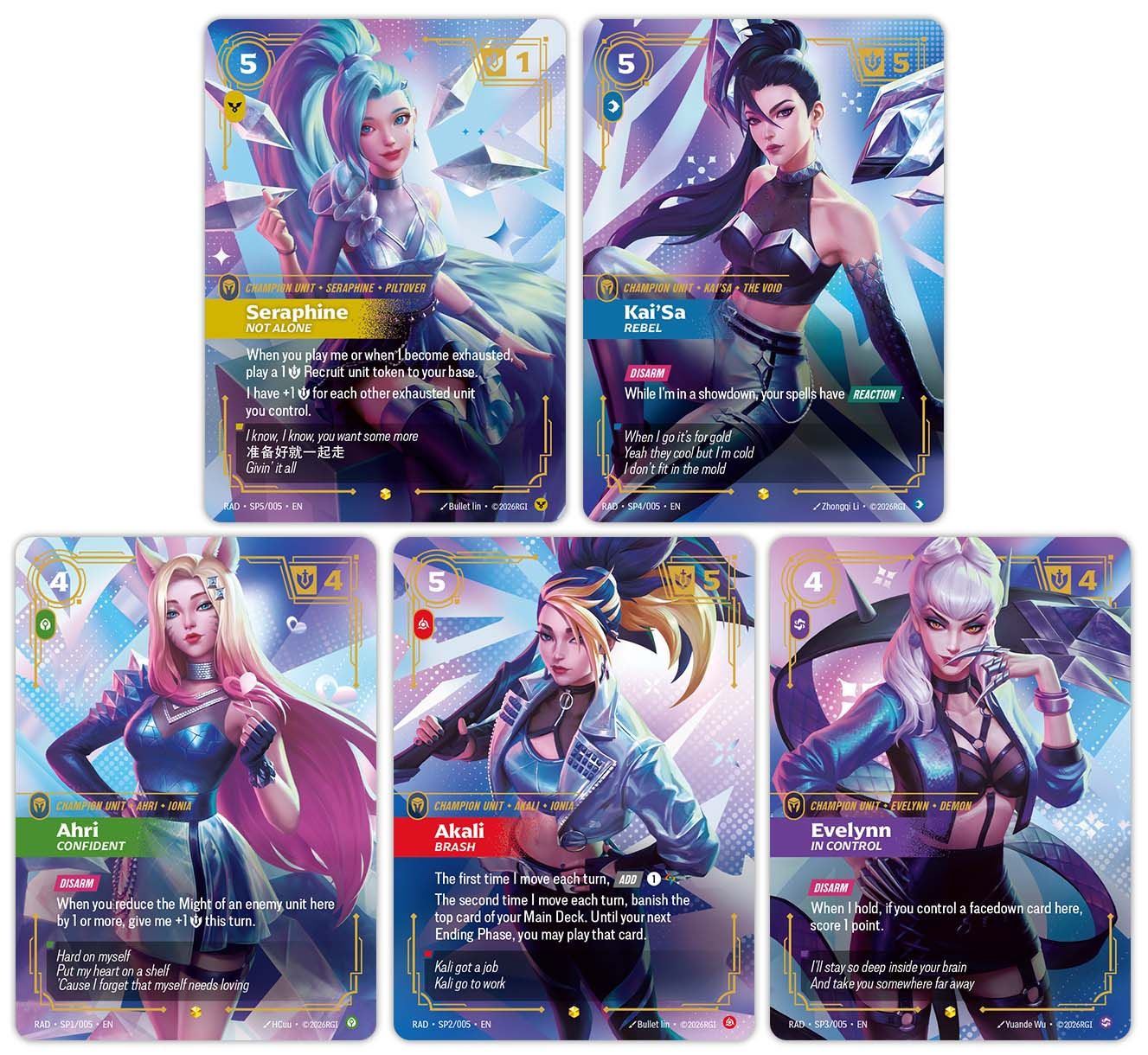
The showcase lineup includes K/DA Special Alt Art cards, Heartsteel Overnumbers, and musically themed Alt Art Runes. The nine new Legends also have Overnumbered variants, including artist signature versions.
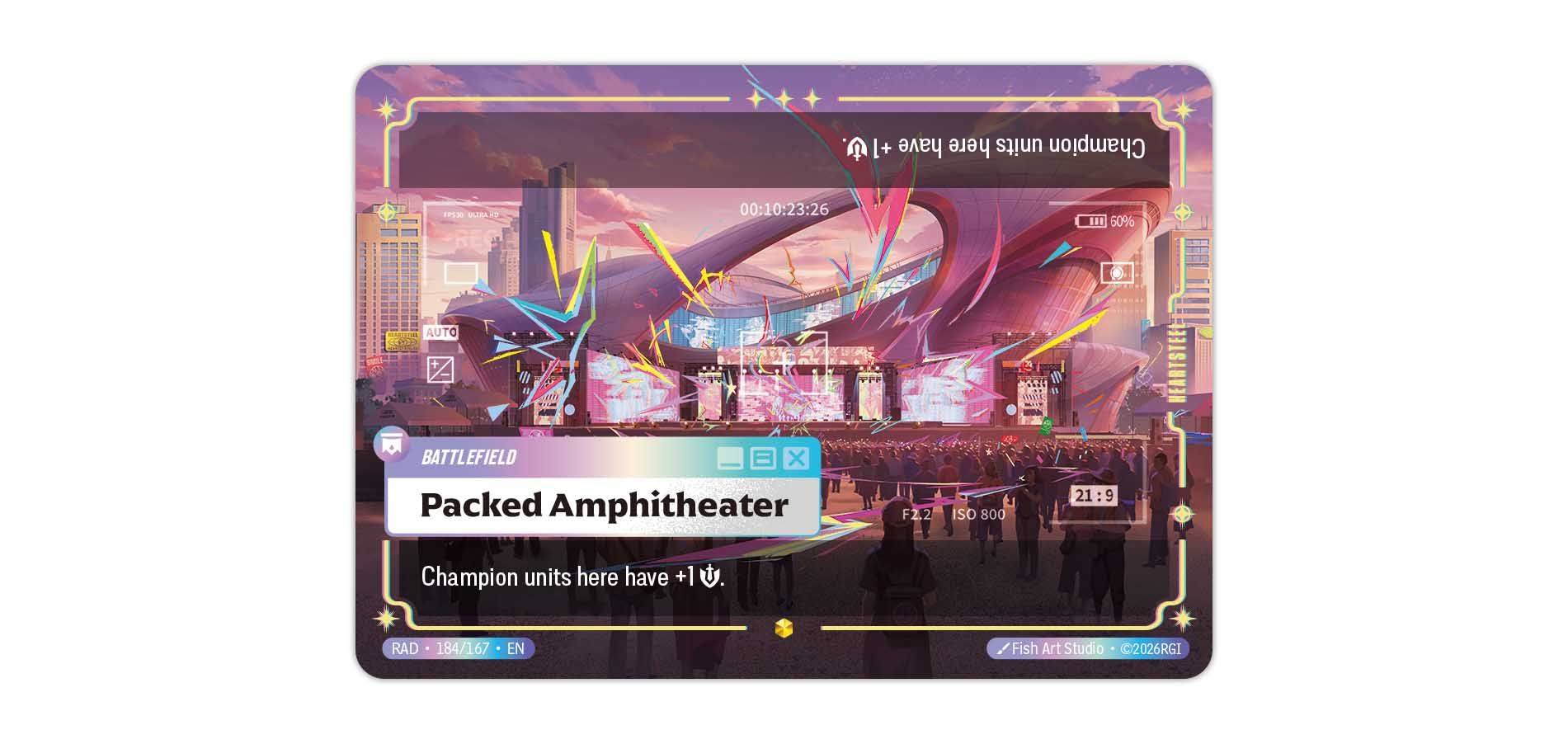
The headline chase is Packed Amphitheater, an Ultimate Rare Battlefield. Riot gives its average appearance rate as approximately 0.025% of booster packs across the print run. That is about one in 4,000 packs, a mathematical conversion of the published average, not a promise about any opening.
There is no guaranteed Ultimate Rare in a pack, box, or case. A long run without one does not make the next pack due for a hit. Make your buying decision around a budget you are comfortable spending without pulling it.
Check updated card text before playing
Radiance already has official errata for Elnuk Herd, Last Caress, Forbidden Technique, and Neeko, Blending In. Printed wording is not always the final reference for how a card works.
Neeko is a useful example: the updated text allows you to choose up to three different additional Legends, rather than requiring exactly three. If you are building around a new interaction, check the current card text and rules before committing to the list.
What to keep separate before sorting duplicates
Start with four groups:
- Collection cards: Alternate treatments, signatures, and cards you personally want to keep.
- Deck candidates: Cards you plan to test, including ordinary versions of useful effects.
- Accessories: Runes and tokens that belong with your play supplies.
- Duplicates to review: Everything left after checking the first three groups.
Record language, condition, and treatment when identifying a card. Two copies with the same name can still be different collector items. Sleeve cards you want to preserve before moving on to the next stack.
If you decide to sell duplicates, confirm that a buyer accepts the game, language, condition, and category you have. Compare the amount left after shipping and applicable costs. Do not assume a new release has an available buyer or that every common belongs in bulk.
Pick the experience you want first: a match with a friend, a particular collection goal, or an opening within a fixed budget. Then sort what you pull with that goal in mind.